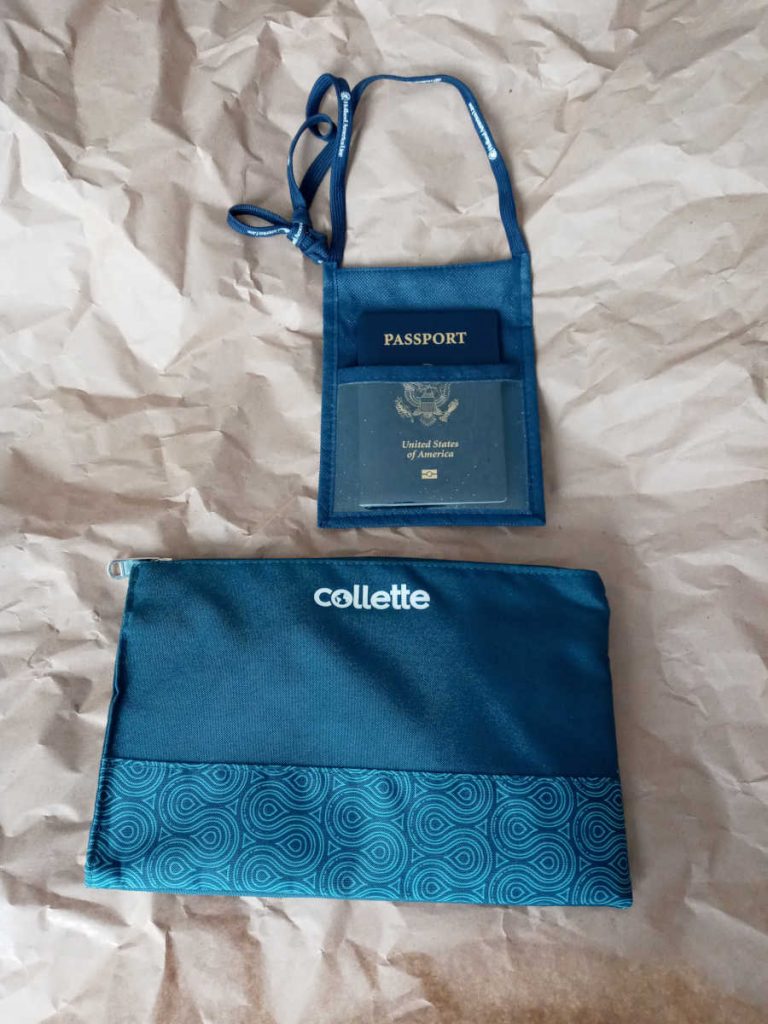
We’ve been back more than a week. It’s taking me a long time to get things back into a steady state. Seems like there’s a ton of things to fix at home. Fixing the fence moved up to the top of the list, as I was confronted by two growling and barking dogs in our back yard the other night, when I went out there at 3 :30 am or so. Part of it was jet lag, but it’s actually not that uncommon for me to get up early. So, what were my learnings?
Everything is expensive.
Just about everything is imported to the country, so it’s expensive. At the time we went, the exchange rate was about $1 US = 125 ISK (Icelandic Kroner). And they use the dot (.) to the way we use a comma in the US to separate thousands. So when they say 1.000 as a price, that means 1000. My mental shortcut is to simply think of it as US notation, and multiply by 8. So 1.000 KR translates to $8.00 . The cheapest food hall meal is maybe $32, and that’s with water as a drink. There is no concept of fast food, but you can get a hamburger for about $40. A USB wall charger was about $50. Entrees at a sit-down restaurant were $60 – $80. 3 mile taxi ride, $32.
Granola bars are a great way to save money if you want to skip a meal for any reason, or simply find yourself peckish while walking around, waiting for the next tour, or waiting for your flight. Those $7-10 snacks add up.
The displayed price is what you pay.
Tax is included, and in fact, if you buy expensive items, like over $120, Iceland will rebate a part of the tax to you if you turn in the receipt as you leave the country. We made no such purchases.
Also, in the European tradition, tipping is not expected. I like that very much, not only because it gives a bit of relief on prices, but because then, a tip really means something.
Cash isn’t needed.
The travel agent recommended that we get a small amount of the local currency before going on the trip, or to exchange US dollars at the airport. We didn’t, and I don’t regret it.
Every single thing we bought there could be put on our Visa card, and we got a card with no extra fees for foreign transactions. About the only thing Icelandic currency might be good for is tips, and that would only be as a convenience to the person being tipped. Our Chase ATM debit card worked fine in Iceland with no additional fees. We didn’t use our credit card (with PIN) to get cash, because that would have incurred a cash advance fee, plus immediate interest. One problem with the ATM was that it did not dispense small bills. The smallest thing we got from the ATM was a 5.000, which was $40. I had to break it into 1.000’s at a store, since the hotel lobby wouldn’t do it.
On the matter of tipping, I think we could have used US currency. It would all be the same to our guide, who would need to convert it to Euros, anyway. And I suspect the cleaning staff, if they get tipped at all, are accustomed to converting foreign currency.
Electricity
The electricity is 240V, Euro Plug, everywhere. A travel brick, preferably with USB charging ports, is all you need, unless you have multiple devices. Most modern computer and electronic devices work on a range of 100-250V, so can be plugged straight into the wall socket in Iceland, with the right adapter. Try to bring the adapters with you if possible, as they will be very expensive if you buy them after arriving.
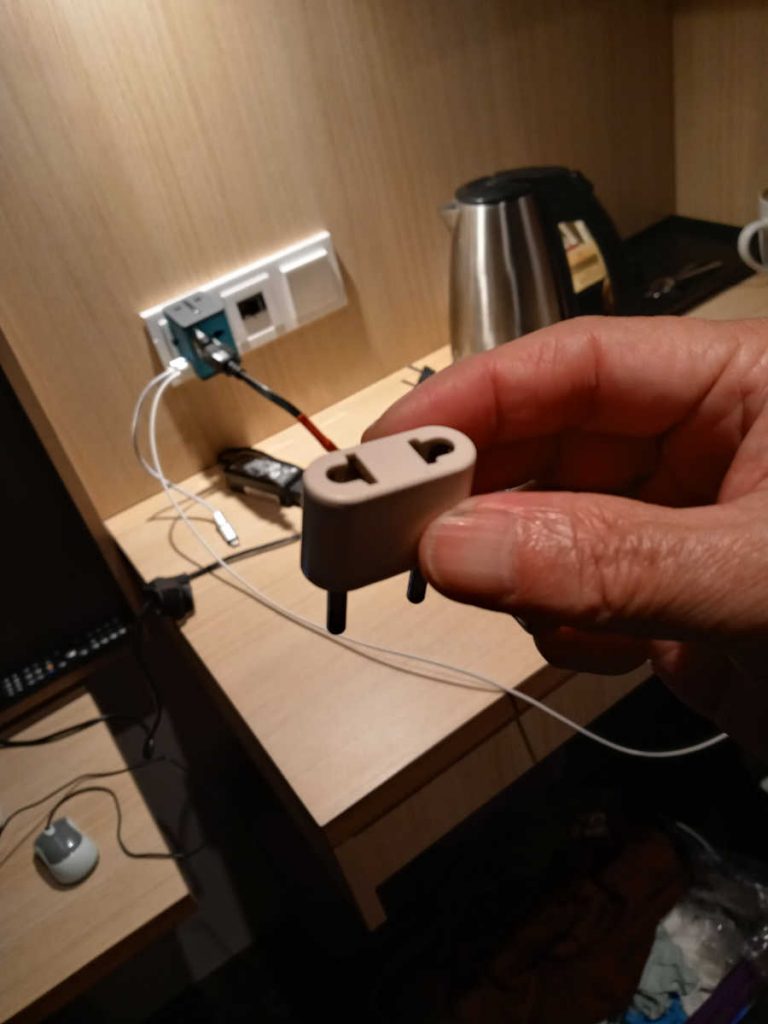
Every room had a water boiler and hair dryer, so don’t bother bringing those.
On our organized tour, there was ready access to power, even on the bus, so there was no need to bring my own power bank. If I go on such a tour again, I’ll save the size and weight.
Water
It was worth bringing ONE water bottle. I just brought an empty Gatorade bottle with screw top, empty when going through airport security, of course.
Iceland has no water shortage, or at least, not yet. The water is clean and drinkable straight from the tap. It’s reminiscent of the Honolulu water I grew up with. In some places, the hot water may have a sulfur smell – I suppose not unexpected where hot water is pumped straight out of the volcanic ground.
Wi-Fi and Data
Wi-fi is everywhere in Iceland, and fast. So many stores in Downtown Reykjavik had guest wi-fi. The Center Hotel was one of the few places that had a password on their wi-fi, but we were given that. The Dyrholaey wi-fi didn’t even have a password. Tourist attractions all seemed to have free wi-fi.
Using an app such as WhatsApp, you can keep in touch over wi-fi. Some phones like mine will send texts via RCS and make phone calls, even if there is no phone service, as long as there is a wi-fi connection.
Needless to say, there was no need for a special SIM or data plan for my phone. Unless you’re the kind of person that absolutely needs connectivity every moment (some do), airplane mode with wi-fi enabled should be sufficient. Tip: Download the map of the entire country of Iceland while connected to wi-fi. Then you can navigate any street.
December in Iceland…
We were there at the beginning of December. It was cold, but not as cold as a ski area. But the wind on the first day was brutal. My jacket, with the hood up over a hat, was mandatory in the wind.
The island is right on the arctic circle, so days were short when we visited, with about 4 hours between sunrise and sunset. But because of the shallow angle of the sun, there was light long before sunrise, and long after sunset. A full/gibbous moon did not set for 5 days. But had the timing been different, the moon might have been below the horizon for a similar time. I thought I might get depressed with the lack of sunlight, but it turned out to be okay for the week we were there.
The Blue Lagoon supplies everything
Don’t bother bringing slippers or a towel – just your swimsuit.
Auroras are extremely unreliable
I’m grateful that we saw anything at all, as I’ve heard of some tours that saw no auroras whatsoever. That said, what we saw was underwhelming. It looked like the barest wisp of clouds to my bare eyes.
A professional camera or newer phone (i.e., iPhone 12 or later) is needed to capture any color. A tripod is crucial, because exposures of several seconds are best. It can be a tiny tripod if you want. And even with the equipment, you might still see nothing.
About Cameras
I brought our Fuji XP80 because I knew we were going to the Blue Lagoon, and that camera can go right into the water. The Fuji also had a few other features that my cheap phone didn’t – like Panorama, and a long exposure that could (kind of) capture an aurora. Still, my cell phone was usually the most convenient camera.
Juggling two cameras turned out to be a real pain. They had diferent methods of syncing to my laptop, meaning double effort. Also, it was a chore remembering which camera took which picture. If I was looking for a picture of the Yule Cat, I had to search through two folders to find it.
Sharing pictures with others on the tour was a non-trivial matter. Our travel agent had set up a Photo Circle App to share photos. However, Photo Circle won’t work on a laptop, unless one pays extra. I had to download my Fuji photos to my laptop, then upload to Google, then download them to my phone’s gallery, in order to post them to Photo Circle. Pictures taken on the phone could be shared directly, of course. Photo Circle also did not share at full resolution (what app does, without charging extra?), so the best picture sharing was directly to other people. While iPhone users could AirDrop to each other, and Android users could do something similar, going between Apple and Android was not so simple.
Blogging on a trip
Blogging in general is a hard, hard thing to do on any trip, and even harder on an organized trip where you are constantly herded to the next scheduled activity all day, and there is little enough time to rest. I do not recommend blogging on an organized tour.
And finally, the best thing to wear in the airport.